How Fika and Friendship Got Me Through a Swedish Winter
I sigh, weaving past a family of four wrangling two enormous plastic-wrapped suitcases. My North Face duffel bounces lightly at my side as I slalom through the airport crowd, moving faster than anyone. It’s not just about speed, it’s about the feeling. I’m free. Everyone else is dragging their lives behind them.
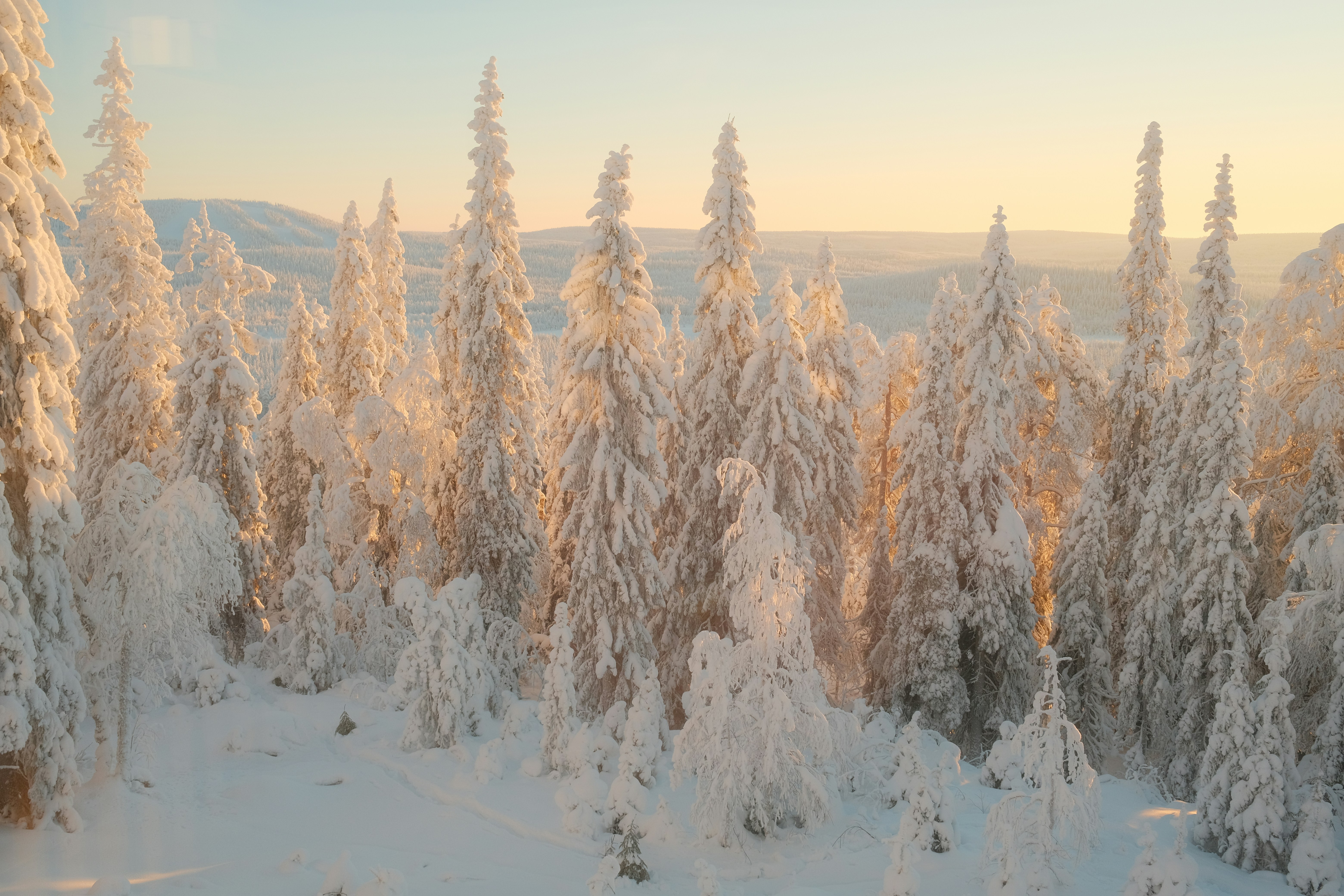
I never meant to move to Sweden. But after a year of near-total darkness (and a lot of kanelbullar) I learned how to find the light.
Walking home alone along Drottninggatan in the darkness of 2 p.m., I walk faster, anything to keep the cold at bay. The sidewalks are already icy, and the little anti-slip pebbles crunch beneath my crampon-fitted boots. Like many things, I bought them here, part of my slow adaptation to the city.
Then came the long winter coat that dropped to my ankles, and the technical gloves. Oversized shirts for work, to help me blend in with my Swedish colleagues. The rather shapeless pants.
In Stockholm, feminism is worn like an oversized outfit, blurring the lines of gender-defined bodies. A striking contrast to my native France, where waists are underlined and makeup is worn to be seen.
Seagulls cry overhead as I cross one of the city’s many bridges. The water is slowly freezing, and in a few weeks, people will skate across it, connecting each island seamlessly. The city is silent and somber. In this kind of cold, no one stops to chit-chat.
We’re entering what I’ve come to know as hibernation season. Unless you manage a direct invitation into someone’s home, rarer for a non-Swede than a golden ticket to the chocolate factory, you’ll spend winter wondering where everyone went.
Like so many things in Stockholm, from clothes to attitudes, I had to learn how to navigate them. The city doesn’t give itself easily. It’s an acquired taste.
Maybe that’s also because I never intended to end up here. Most of the expats I met were actively chasing Scandinavia and its lifestyle: gender equality, generous parental leave, the effortless cool of the city. They dreamed of a perfectly balanced life in Stockholm.
I moved here for work. If the job had been in Hamburg, Singapore, or São Paulo, I would have gone there instead. I’d never set foot in the city, or the country, before arriving. Everything was new and surprising. I arrived on a Sunday, signed for my nine DHL boxes, and went out for meatballs. Total plunge.
Before I lived here, I hadn’t paid much attention to what people said about Sweden. I imagined a place remote and close to nature. Cold, clean, emotionally distant.
I pictured the Swedes as tall, blond. Wearing black. Stylish. Hard to reach. Beautiful.
Everyone warned me about the cold, and yes, it got cold. The kind of cold that feels like an act of aggression. Where breathing stings. Where even two pairs of gloves don’t help. Where stepping outside requires a compelling reason, and nothing less.
What I wasn’t prepared for was the darkness. In winter, the sun rises at 10 a.m. and sets again at 2. Darkness that makes you tired and hungry. That robs you of the desire to wander, resists spontaneity, turns you into a homebody.
And yet, darkness might be the perfect metaphor for Sweden itself. Because yes, it’s tough, but there are ways to work around it. And eventually, toward it.
Darkness creates beauty. It brings a mystical quiet to the city. An eerie glow from streetlights settles over snowy streets. Every restaurant becomes an island of warmth. Candles glow in nearly every Stockholm window. The Swedes fight darkness with poetry: quiet and gracious.
I remember that first winter vividly. How physically tiring it was. How bleak the city felt. And then, almost overnight, I began to see the other side.
I began placing the traditional candles in my own windows. The streets filled with Christmas lights. Cold walks through the dark were broken by the warm glow spilling from restaurants, inviting you in. The smell of cardamom and cinnamon buns matched the taste of snow in the air.
Those small moments, taking off my gloves in a coffee shop, wrapping my hands around a mug of tea, became treasures. Little stars in the winter sky.
I also began to understand the systems behind hibernation. Going home after work in winter is a rookie mistake. If you want plans, they have to happen right after. Because once you’re home and you’ve peeled off your onion layers, your motivation drops to zero.
The next part of the game: you plan ahead. Spontaneity has no place in a Stockholm winter. Who knows how motivated you’ll be at minus eighteen? If you want a social life, you schedule it. One week ahead. Two weeks. You lock it in, no backing out.
Experiencing the cold and the dark helped Sweden start to make sense.
Take fika: the daily pause for coffee or tea and a kanelbulle, its sweet spice warming you from the inside. It’s not just a snack break. It’s ritual, connection, seasonal resistance.
Then there’s the design. Swedes are known for it, of course, how could they not be, when they spend so much of the year indoors? Their homes are havens of soft light and harmonious colors, carefully composed to push back against the world outside. These spaces are fiercely protected, rarely shared. Especially with newcomers.
And of course, the sauna. A country that builds little wooden rooms to heat the body up, and cuts holes in frozen lakes to shock it awake.
The more I lived with the extremes, the more I saw how they shaped everything. The Swedish way of life is a constant adaptation to the environment. And through contrast, that environment becomes culture.
Sweden was incredibly hard to break into. I spent my first year barely able to make small talk with colleagues. The early months, just trying to understand the system and find my place in it, felt cold, literally and otherwise.
As a French person, I kept expecting someone to invite me for a beer and talk it out. But Swedes aren’t naturally hospitable, not out of rudeness, but disinterest.
And that, to me, was incredible. I’ve spent my life adapting to new cultures. I’m curious about everything: people, routines, the small things and big ideas. That kind of quiet indifference took me by surprise.
The truth is, Stockholmers don’t need you. They’re loyal, lifelong friends. Everyone I met had close friends from kindergarten. From every school, every job, every phase of life.
They don’t need you to expand their social circle. They’re at capacity.
But if they start chatting with you at the coffee machine, say yes to fika, maybe even invite you into their home, or their country house, which nearly everyone seems to have, something significant has shifted.
For them, much more than for us in Latin cultures, friendship is a commitment. A decision. Not made lightly.
A Swedish friend won’t vanish when you move away. That kind of loyalty matters, especially in a culture where everyone they love is already nearby. Why risk building something with someone who won’t be around to share long walks in Djurgården or fika at Vete-Katten?
I can pinpoint the exact moment when one of my colleagues became one of my closest friends.
After months of small talk and inching closer, I casually suggested a drink after work. The sun was shining, rare enough to warrant celebration. She said yes.
We went to Urban Deli, a rooftop bar that looked like a garden perched above the city. We ordered Aperol Spritzes. She asked for chips, turned to me, and said, “Like an apéro, right?”
I’d been talking about the French concept of apéro for months. And here we were, sharing one in Stockholm, just the two of us. That was the turning point. We were friends now.
Walking home after two more Aperols, I knew something had clicked. I’d created the opportunity, but she’d said yes, wholeheartedly. I stepped one moment closer to Sweden, learning to cherish every drop of sunlight. And she stepped toward France, embracing the spontaneity of a shared apéro.
In that moment, I knew I’d made a friend for life.
After that first year, I started hearing more than just weather talk at the coffee machine. I learned little details about the lives around me. People accepted invitations to my place. They got curious about my traditions, and started sharing theirs.
I was invited to a crayfish party in summer, a Lucia concert in winter. I visited country houses. I tasted Smörgåstårta (“sandwich cake”). Yes, it’s as strange as it sounds.
And I made friends. Lifelong friends. The kind who explained the details about Sweden I never could have figured out alone.
And just like that, winter ends.
But not when you think it will. You expect it to ease off in March, but by April it still lingers. Gray, cold, and without the sparkle of snow to soften it. Bare trees. Sidewalks dusty with winter gravel. Empty, tired streets.
Then one day, a ray of sun breaks through. And there you see the Swedes, in all their quiet splendour.
They’re still walking briskly, a habit from the minus-twenty days that sticks even in plus twenty. But suddenly, they stop. On benches. At street corners. Right outside their offices.
They stop, and like sunflowers, lift their pale faces to the sun. Soaking it in. Never taking it for granted.
For me, that’s the biggest thing I’ll take with me: I’ve never loved a summer the way I loved a Swedish summer.
Not because it’s especially warm or sunny. It’s not. It’s mild, often gray. That first year, I was disappointed. More by the non-summer than by the winter.
But after living through a full winter, I understood. The beauty of the sun. The way the entire city transforms. Bars drag tables onto sidewalks. Streets seem to triple in size.
People rush out after work, desperate to catch a spot in the sun. You wonder where they were all winter. But with that first drink in the light, you understand.
Just like the Swedes themselves. The icy beginning, the long darkness, it all makes the eventual warmth feel deeper, once they let you in.
Walking home from fika with the girls, my Supergas slip slightly on warm summer gravel. Parks are full, every terrace buzzing. People soaking up every minute, stocking up on memories (and vitamin D) for the winter to come.
More for you
Check out other articles

Lifestyle
Apr 4, 2025
The Art of Ultra-Light Travel
I sigh, weaving past a family of four wrangling two enormous plastic-wrapped suitcases. My North Face duffel bounces lightly at my side as I slalom through the airport crowd
Read more

Travel
Apr 4, 2025
In Alsace, We Eat Like We Mean It
When people talk about French food, they usually picture the Michelin-star temples of gastronomy, where dishes come plated like abstract art, and the line between meal and performance blurs entirely.
Read more